

Sensory Integration Difficulties or Sensory Processing Disorder
Sensory Processing Disorder (SPD) is a condition that impacts how the brain interprets sensory information from the environment, including what you can hear, see, smell, taste, or touch. Children with SPD may experience sensitivities or difficulties with sensory stimuli that can affect one or all of their senses. This disorder can manifest as over-sensitivity to stimuli that others may not perceive or, conversely, as a need for more intense stimuli to register an effect.
Sensory processing can have a significant impact on multiple areas of a child’s life, including attention and concentration, play abilities, social skills, mood and behaviour, as well as gross and fine motor skills.
How we can help at Therapy4Kids through Occupational Therapy
At Therapy4Kids, we use Sensory Integration (SI) therapy to address Sensory Processing Disorder or sensory integration difficulties. Our approach involves exposing children to sensory stimulation in a structured, repetitive manner. Our therapists begin with simple activities and gradually progress to more complex ones. Over time, a child’s brain adapts to these sensory experiences, enabling them to process and react to sensations more effectively and appropriately.
Our team is dedicated to helping children with Sensory Processing Disorder develop the sensory regulation skills they need to thrive in various aspects of their lives. Through tailored therapy, we support their growth and development in a positive and engaging environment.
Swinging and Rocking
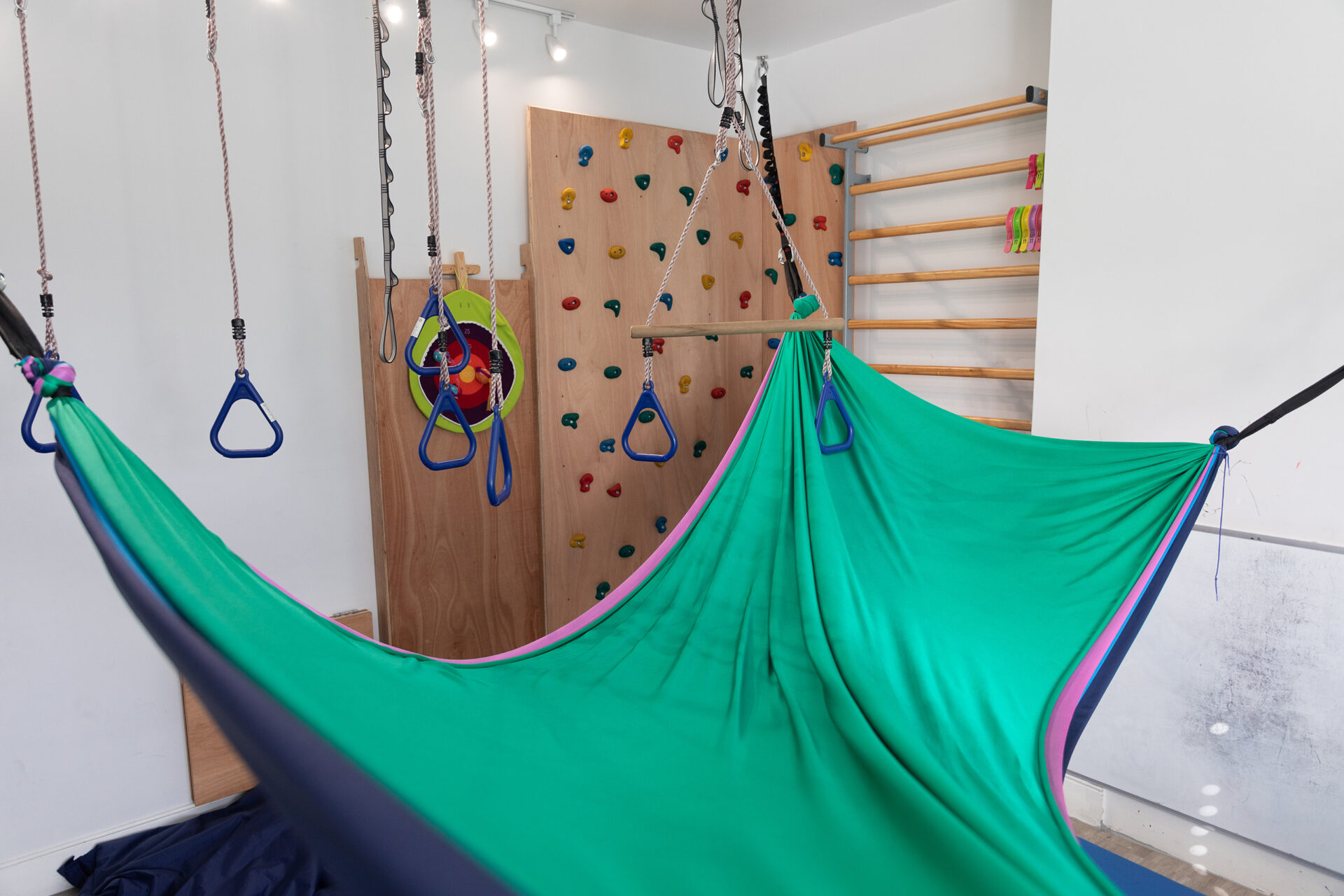
Therapy sessions may involve swings and rocking chairs to provide vestibular (movement) input. This can help children who seek movement or have difficulties with balance and coordination.
Sensory
Diet
Occupational Therapists often create a “sensory diet” tailored to the child’s needs. This may include activities like brushing, joint compressions, movement breaks, or deep pressure massage to help children regulate their sensory systems.
Tactile
Activities
Activities that focus on tactile input, such as touching different textures, feeling various materials, or engaging in finger painting, can help children become more comfortable with different sensations.
Oral Motor
Activities
Activities that involve the mouth, such as blowing bubbles, whistling, or sucking through a straw, can be used to address oral sensory sensitivities or challenges.
Balance and Coordination Exercises
These exercises may involve activities like walking on balance beams, hopping, or skipping to improve a child’s balance and coordination skills.
Fine Motor Skill Development
Activities such as stringing beads, finger exercises, or using tweezers to pick up small objects can help improve fine motor skills.
Environmental Modifications
Therapists may provide recommendations for adapting the child’s environment at home or school to reduce sensory triggers or create a sensory-friendly space.
Social
Interaction
Group activities or cooperative games may be used to help children practice social skills and learn to engage with peers effectively.
Visual and Auditory Stimulation
Therapists can use various visual and auditory tools to expose children to different sensory experiences and help them become more adaptable to sensory input.
Desensitization Techniques
Gradual exposure to sensory triggers may be used to help children become more comfortable with stimuli that previously caused distress.
SI therapy is highly individualized, with therapists tailoring activities and techniques to address a child’s specific sensory needs and sensitivities. The ultimate goal is to help children become more adept at processing and responding to sensory information, thereby improving their daily functioning and overall well-being.
Meet Our Occupational Therapists



If you’d like to talk more about a specific health condition get in touch
0208 605 2050
info@therapy4kids.co.uk